
THE BUSINESS REDESIGN INTENSIVE
You didn't build your business to end up as the one thing it can't run without.
You built it for the opposite. And for a while, that's exactly what it did. Revenue is consistent, clients come back, the team is capable. Everyone who looks at you assumes you've made it. They're not wrong.
You're also the one who can't leave. Every decision that matters still arrives at your desk, every bit of growth now takes more out of you than the last one did, and you spent your last holiday answering work emails on your phone.
In two months, the Business Redesign Intensive settles what your business becomes, what leaves your desk, and what you're building towards.
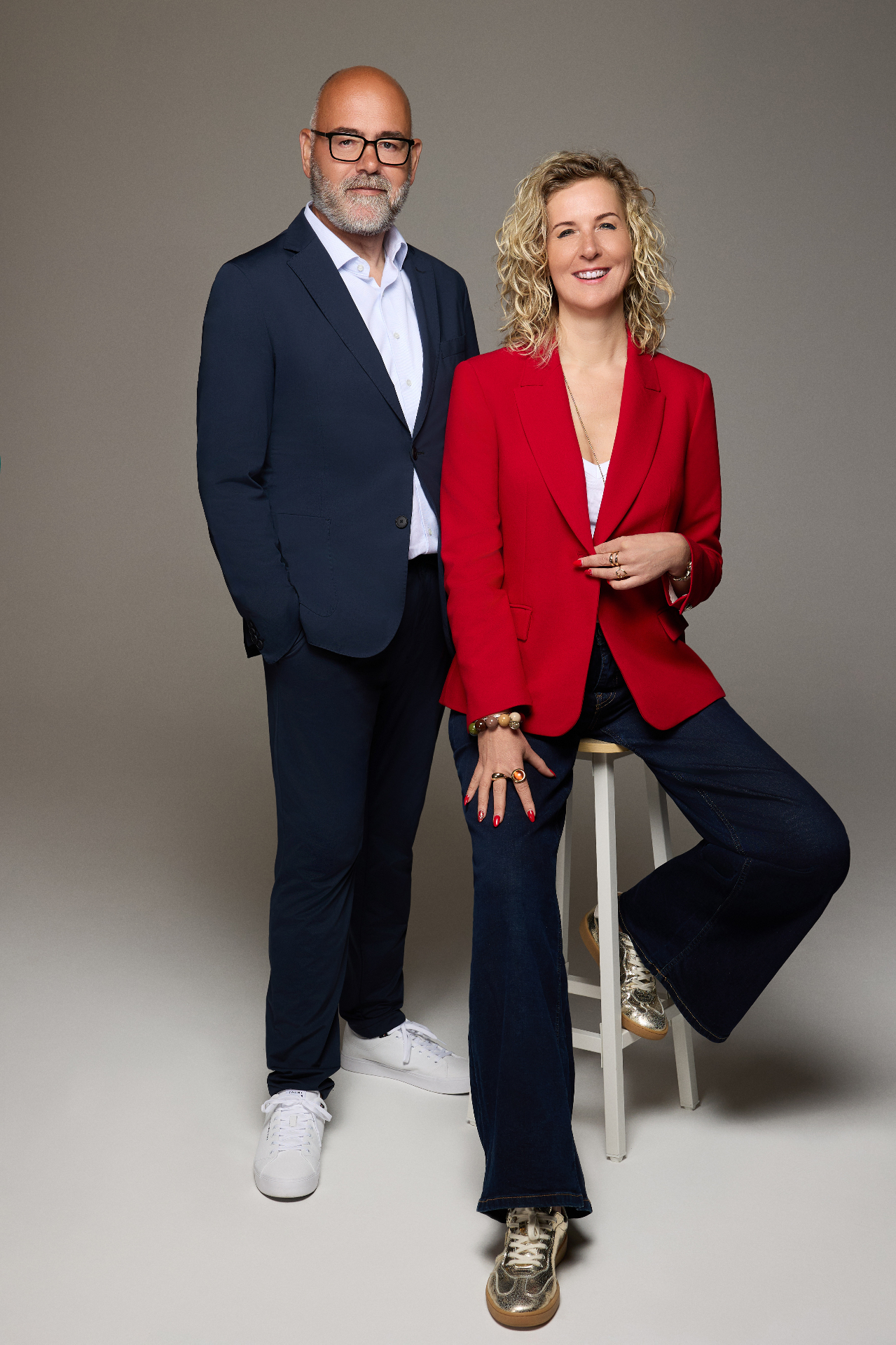
With Dennis Kuipers & Linda Nordholt

“There's a lot going on at the moment.”
Something close to that comes up in almost every first conversation we have.
“At the moment it's just firefighting.”
“Whenever you take a new business on there are going to be new challenges.”
“I'll just weather the storm.”
Every one of those is true. There is a lot going on, and there is a reason for it.
There was a reason last year as well.
So: how long has it actually been like this? Asked directly, most founders land on a number between three and ten years.
And then, usually a minute later, this:
“We've got a good structure, we've got a really good team.”
“It's bloody good at the minute anyway.”
“This isn't a cry for help.”
Also true. The business is good, the team is capable, and you built a company past a million, which most people never do.
It's also the reason you're stuck.
You've been paying for it the whole time.
What it's doing to the business
Revenue went up and not much of it made it to the bottom line. You added people and the output didn't move in proportion. There is more work moving through the business than there has ever been, and you'd struggle to say which of it is genuinely making money.
The numbers that would tell you don't exist in a form you can use. You watch the bank balance, what's owed to you and what you owe - which tells you whether you can pay everyone this month. It doesn't tell you where the margin actually sits, or which growth is worth having.
So the decisions get made on instinct. Yours has been good; that's why you're here. It's also why the moment a good instinct stops being enough is hard to spot.
What it's doing to you
You know roughly what hours you're working, and you'd rather not say the number out loud.
You're awake at half five with the business already running. Weekends are when you finally get to your own work, because the week went on everyone else's. And you can sit in a room with your family while half of you is still at work.
Somebody at home has mentioned it by now. Possibly one of your children.
And you've been telling them, and yourself, that it's temporary.
Neither of these is a discipline problem, and you can't correct either one by applying more of what produced them.
WHY THIS HAPPENS
A business built around a good founder works extremely well. Up to a point.
You made every decision well, and quickly. So the company learned to send you the next one, and the one after that. None of that was a mistake at the time.
The company grew. The way it's built didn't.
You already tried the obvious thing
You hired someone to take it off you. Possibly more than once.
For a few months it worked. Then something wobbled. A client relationship, a decision made badly, a month of margin. So you stepped back in, because at that moment it was the right call. Then it happened again. After the second time you stopped handing that thing over. Based on what you'd seen, that was the right conclusion.
What you took from it was that delegation doesn't work here. What actually happened is that the task moved and the authority didn't — so the decision still had to be made by you, and it came straight back.
That isn't a people problem. It's the structure, showing up as a failed hire.
The ceilings are predictable.
A company built with the founder at the centre of everything runs to roughly thirteen people before it becomes unmanageable. Add real structure and it runs to about fifty before the next wall. Each ceiling needs a different structure — and a different founder.
That is the part nobody wants to hear.
The version of you that built this can't be the version that scales it. Letting go of the things that made you good at this stage is the work, not a criticism of how you did it.
Growth here is no longer limited by opportunity.
It's limited by structure. Which is why more effort makes it worse: every extra hour you put in, the business leans on you a little more.
Nobody in your position is short of advice. You're short of decisions.
It isn't consulting. We don't hand you recommendations to weigh up.
It isn't coaching. This isn't about getting you ready.
Over the next two months, the decisions you've been circling get made.
What the business model has to become. Where the profit actually comes from, and what that means for where you point the company. Which decisions stop being yours, and who takes them over, with the authority to actually settle them. Who you have to become for any of it to last. And what you're building towards. That last question decides the rest, and most founders have never actually answered it.
You can't settle these alone, because you'd be using the same thinking that got you here. You can't settle them with your team, because several of them are decisions about your team.
It gives me exactly the push I was looking for. I'm now actually taking the steps to restructure my companies, which gives me far more overview and a clear focus on what's next.
The Business Redesign Intensive was built for the position you're in.
This is for you if
- your turnover is somewhere between £1M and £10M
- you have a team of ten to twenty, or the same complexity carried by fewer people
- the business can't grow any further without more of you in it, and everything that matters still comes back to your desk
This isn't for you if
- you want somebody to run the change for you
- you want to talk it through, not settle it
- you want this business optimised, not redesigned
- you'd rather not look at your own part in how it runs today
WHY LANCESTONE
“There are a lot of people selling something that sounds like this.”
There are. Most of it comes from people who have never run a business past a million, and that single filter removes most of the market.
Dennis Kuipers built his company from zero to $42M and 250+ people, hit this exact wall, worked his way out of it and sold it. Linda Nordholt built, scaled and exited her own. Neither of them started out as a coach. They built and sold their own companies first.
Most people selling this have one move.
It's the move that worked in their own company, and it becomes the answer for everyone who walks through the door — go recurring, hire a number two, productise it, run more ads. Sometimes it's even the right answer. You have no way of knowing, because it was decided before anyone looked at your business.
Not the same answer for everyone
One founder's answer here was a revenue model rebuilt around recurring contracts, after ten years of starting every January from near zero. Another's was to abandon the offer he was about to scale and focus on the small one quietly carrying all his profit. Another restructured his leadership team and stopped being the final approval on everything. Another turned her own framework into a licensed product. Another let go of decisions his team had been ready to hold for two years.
It's all about structure
What's consistent isn't the answer. It's the method for establishing which answer your business needs, and that holds across professional services, IT, manufacturing, construction, logistics and e-commerce, because the patterns that stop growth are the same, even when the businesses have nothing else in common.
This is what you get in the Business Redesign Intensive.
Seven parts, across roughly two months.
Onboarding call, with your Business Strategist
They take your context, your goals and the practical details, and set the analysis up around your company.
The Founder & Business Analysis
A diagnostic you complete in your own time. It covers:
- where the margin actually comes from, and which parts of the business are subsidising others
- how work and decisions move, as opposed to how the org chart says they do
- where the company depends on you personally rather than on the role you hold
- what your team can genuinely own today
- what you want the next five years to look like, including what you eventually want this business to give you
Analysis review session
Your strategist takes you through what it found: how you got here, what's causing it, and how the separate problems connect. You leave that session knowing which decisions the Business Redesign Intensive has to resolve.
Founder Design session
A second session with your strategist: what you want, what drives you, and what you want this business to lead to.
Every founder is building towards something: a sale, the freedom to step back, a portfolio of companies, or something that outlasts them. Most have never actually chosen which — and that choice governs every structural decision after it. It's called your Exit Design, and this is where you choose it.
A private session with Dennis Kuipers and Linda Nordholt
Working from the completed analysis, you settle:
The session is recorded, so every decision and the reasoning behind it carries into your Blueprint.
- what the business model has to become
- where the profit actually comes from, and what that means for where you point the company
- positioning, ideal client and offer architecture
- which decisions stop being yours, and who holds them
- the leadership shift that makes any of it hold
- your Exit Design
- and the priorities for the next 12–36 months, in order
Eindhoven, near Alicante or London
Your Business Architecture Blueprint
Every decision with its reasoning, the design that follows from it, your role inside it, your Exit Design and its structural consequences, and the priorities in sequence for the next 12–36 months.
This is the reference you lead from. Use it, review it, and challenge it as the business evolves.
Closing session
Your strategist takes you through the Blueprint: what it means, and what happens first.
We've already taken real steps on growth. We've decided to hire, posted the vacancies and spoken to our first candidate. I'm changing how I work too, and it pays off immediately.
Your outcome
Decided, in writing, and yours
A lot has already changed behind the scenes. We brought in extra support, started automating for clarity and structure, and now everyone has a clear picture of their own tasks, where before we all had too much on our plate.
CASE STUDY · JM DOORS
JM Doors added £500,000 in revenue with the same team.
“The world opened up. I see challenges I previously missed, and opportunities I had not seen.”

Jim Zandvliet
Founder & MD, JM Doors
£2.5M → £3M
Revenue
+£500k
Growth
Same team
Headcount
Every sale ran through him. Weekends went on working out where processes had gone wrong, and even around his family the business stayed in his head. He doubted anyone outside his industry could be useful to him.
A year on: £2.5M to £3M, same headcount, better margins, and Jim out of daily operations.
Jim's answer was margin and quoting. Find out what yours is.
Q&A
What founders ask before they start
THE NEXT STEP
It starts with one honest conversation.
Twelve months from now, one of two things is true.
The revenue looks broadly similar, the team is slightly larger, and every decision that matters still arrives on your desk. Nothing went wrong. The design stayed the same.
Or you know what the business is becoming, what your role in it is, and which three things happen first.
Book a Discovery Call
A one-to-one conversation with one of our strategists. 45 minutes on where the company actually stands, what's holding it back, and whether this is the right next step for you.
Ready to redesign your business?